Arborvite (Thuja occidentalis)
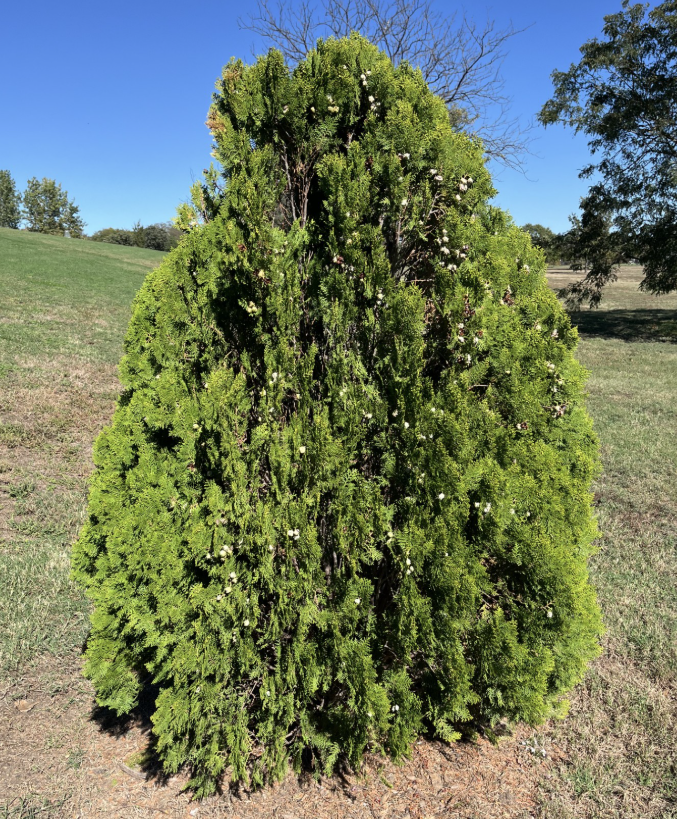
Common Names: Eastern Arborvitae, White Cedar
Scientific Name: Thuja occidentalis
Type: Evergreen conifer
🌿 Description
Arborvitae are dense, pyramid-shaped evergreens native to North America and well-adapted to Kansas landscapes. Their flattened sprays of scale-like foliage stay vibrant green throughout the year, providing texture and color even in winter. Mature plants can reach 10–40 feet tall depending on variety.
🌾 Growth Habit & Conditions
Sunlight: Full sun to partial shade
Soil: Prefers moist, well-drained soil but tolerates clay once established
Water: Regular watering during the first few years; drought-tolerant after establishment
Hardiness: USDA Zones 3–7
🌼 Reproduction & Cones
Small, brown, woody cones form in clusters. Each cone contains several winged seeds, maturing from green to brown as they dry.
🍃 Landscape Uses
Privacy screens or hedges
Foundation plantings
Windbreaks and visual barriers
Accent or specimen tree
⚠️ Common Issues
Browning or dieback: Usually from drought stress or winter burn
Bagworms: Common pest—treat promptly in early summer
Spider mites: Can cause discoloration during dry spells
🌱 Care & Maintenance
Apply mulch around the base to retain moisture and reduce temperature fluctuations.
Avoid over-fertilizing; use a balanced, slow-release fertilizer in spring if needed.
Lightly prune to maintain shape; avoid cutting into old wood.